Carl Hayden Smith is an Associate Professor of Media at the University of East London and founder and director of the Museum of Consciousness. His work, spanning Hyperhumanism, Context Engineering and Cyberdelics, asks one question: how can technology become a scaffold that grows human capacity, rather than a substitute that shrinks it?
/ media kit
Built to be copied.
Bios at three lengths, portraits with dimensions, speaker topics, signature talks, venues. Everything a curator, festival, podcast or press desk needs to introduce Carl properly, without waiting on an email.
/ bios
Three lengths, ready to lift. Pick the one that fits the programme and paste it whole.
Carl Hayden Smith is an Associate Professor of Media at the University of East London and the founder and director of the Museum of Consciousness, affiliated with Balliol College, University of Oxford. For three decades his research has pursued a single question: whether technology can act as a scaffold that develops human capacity rather than a substitute that erodes it. That inquiry runs through his frameworks (Hyperhumanism, Context Engineering, Holotechnica and Cyberdelics) and through more than sixty peer-reviewed papers and over forty recorded talks. He was the first research subject to sustain the full five doses in Imperial College London's extended-state DMT (DMTx) pilot, research that informs both his academic work and his public teaching. He is a Fellow of the Royal Society of Arts.
Carl Hayden Smith is an Associate Professor of Media at the University of East London, where he teaches transmedia and media, and the founder and director of the Museum of Consciousness, affiliated with Balliol College, University of Oxford. Across a thirty-year practice he has pursued one question above all others: can technology be built as a scaffold that develops human capacity, rather than a substitute that quietly erodes it? He calls the affirmative answer Hyperhumanism.
That thesis runs through the frameworks he has developed and taught (Context Engineering, Holotechnica, Cyberdelics, Double Consciousness and Noonautics) and through more than sixty peer-reviewed publications and over forty recorded talks. He is co-founder and director of the Cyberdelic Nexus, director of Noonautics, and Head of Context Engineering and Protocol Development at Eleusis.
His work bridges rigorous first-person inquiry and empirical research. He was the first research subject to sustain the full five doses in Imperial College London's extended-state DMT (DMTx) pilot, an experience that grounds both his academic writing on the shift from altered states to altered traits and his public teaching. A Fellow of the Royal Society of Arts, he has presented at venues including TEDxOxford, SXSW London and the Barbican.
His current work turns these questions toward the defining issue of the moment: how human agency is preserved, and grown, through the transition to a world of capable AI. For Carl, the measure of any technology (psychedelic, digital or otherwise) is simple: does it leave the person more capable once it is taken away?
/ headshots
The press portrait at two sizes. Click either to download.
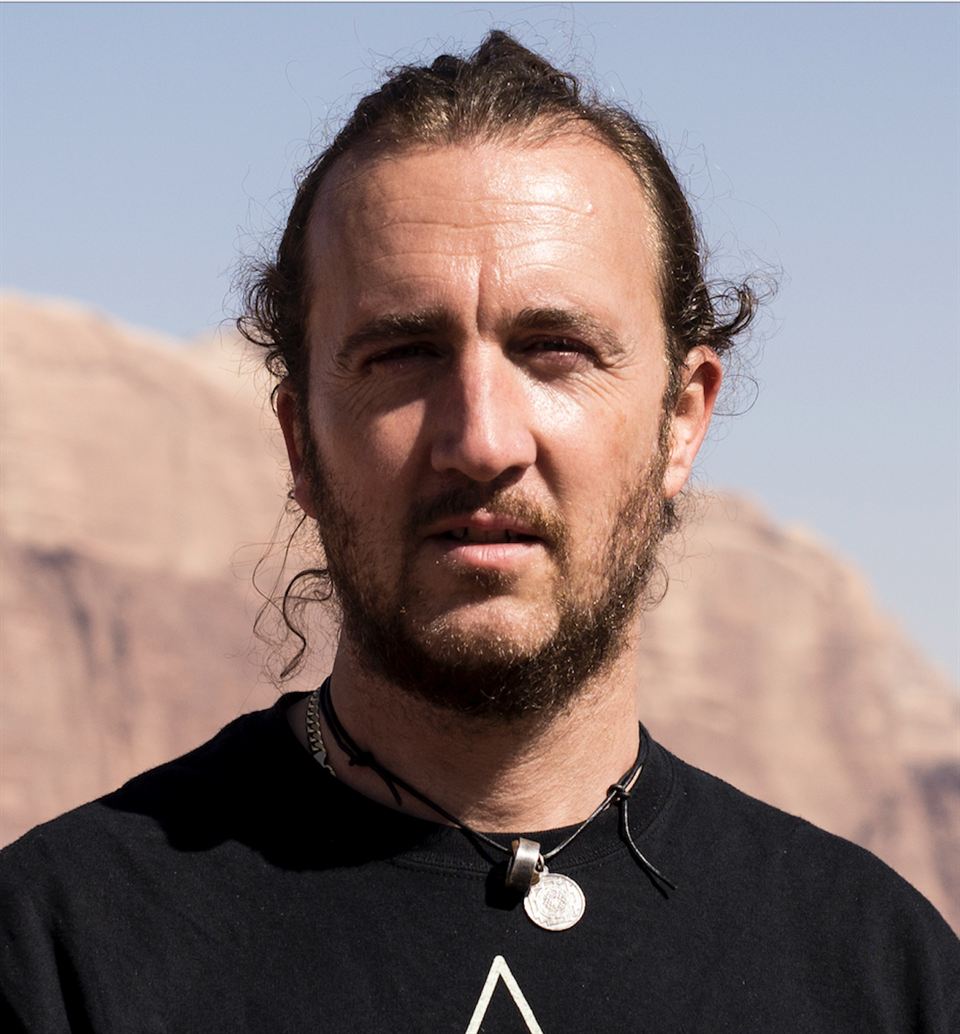
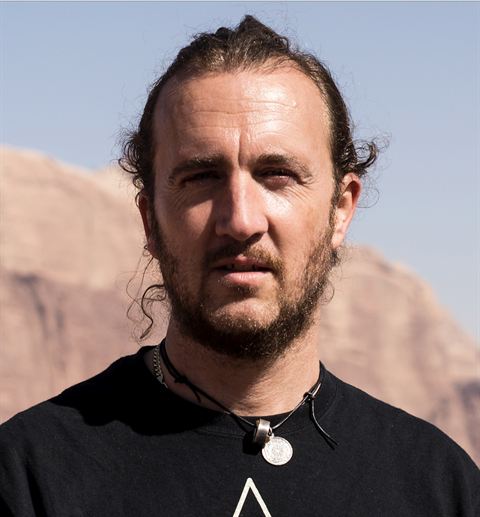
Higher-resolution files are available on request through the contact form.
/ speaker topics
Talks are built around the seven practice frameworks. Any of these works as a keynote, a workshop or a long-form conversation.
- Context Engineering Treat context as a medium. Read room, forest, timetable as live interfaces. Then change them on purpose.
- Holotechnica Composing repeatable experience stacks that convert short-lived state shifts into traits that stay when the scaffolding drops.
- Double Consciousness Holding more than one experiential field at once without thinning either. Clarity under split attention, not divided attention.
- Umwelt Hacking Borrowing perceptual worlds from other species, neurotypes, and tools to break the default human model of what counts as intelligence.
- Hyperhuman Methods The working library. State regulation, perceptual widening, epistemic resilience, relational capacity, all turned into daily protocols.
- Museum of Consciousness A live archive of inner experience. Participants co-curate audio exhibits, practice high-resolution reporting, and close the loop between art, measurement, and iteration.
- Personal Operating System Your own daily and weekly routine, assembled from the methods you've actually tested. The thing you leave a residency with that keeps working at home.
/ signature talks
Four that show the range. Each links into the full archive.
- featured An Ecology for the Re-Enchantment of Life TEDxOxford 18:00
- CONTACT! Encounters With Entities In Extended State DMT Studies Aubrey Marcus Podcast 2:09:32
- Hyperhumanism: Reclaiming Our Humanity in the Age of AI Adventures Through The Mind 1:28:12
- Holotechnica: Exploring the Nexus of Altered States and Altered Traits EVA London 2024 25:07
All 43 recorded talks are on the talks page, grouped by practice framework.
/ seen and heard at
TEDxOxford · SXSW London · the Barbican · Ozora Festival · EVA London · HICSS · Museum of Consciousness sessions in Oxford, Berlin, Brooklyn and Cairo
/ booking
One form, read weekly. Put the date and format in the subject line and it'll jump the queue.
book carl →Formats, fees and the other ways in are on the work with me page.